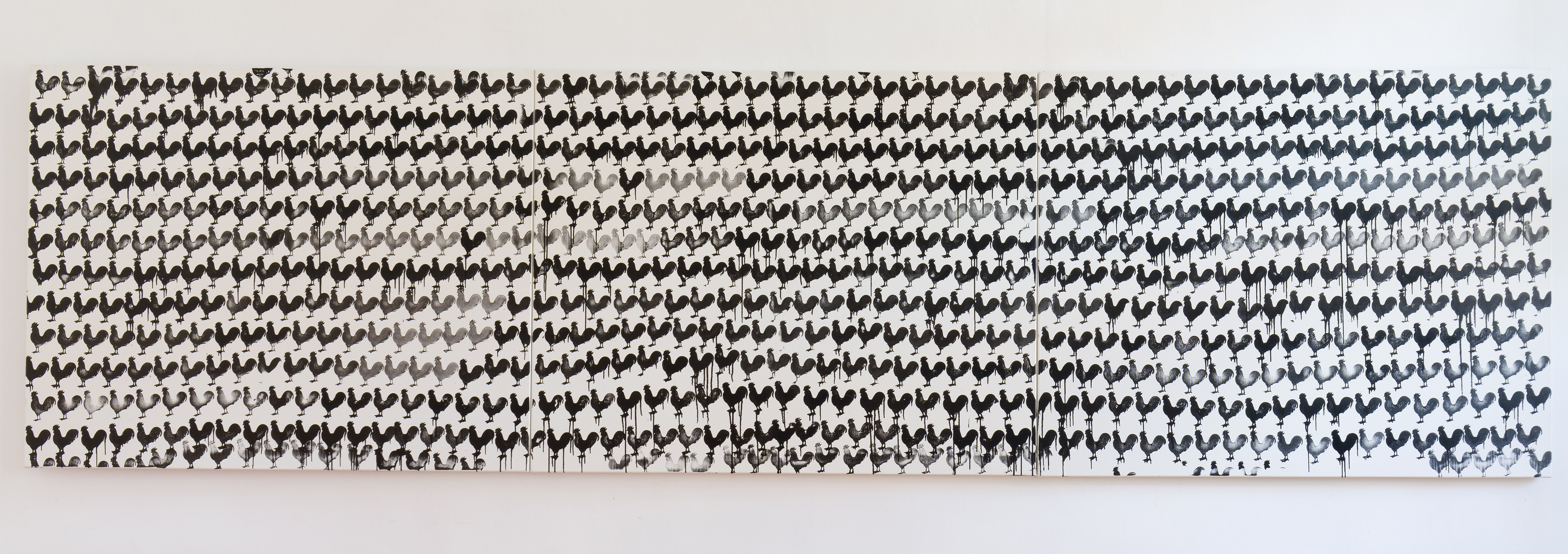
Every nation of the world represents a community with its individual identity. However, this identity is in no way confined to a unique matrix or compound but on the contrary, the multitude of traditional cultural features can be found in other cultures in similar if not identical forms. The rooster appears as a symbol of faith, of bravery and courage, of trust, kindness but also, in Christian art as a symbol of Christ himself, a symbol of solarity, light and resurrection which became an end to chaos and a messenger through which a new spiritual order was established.
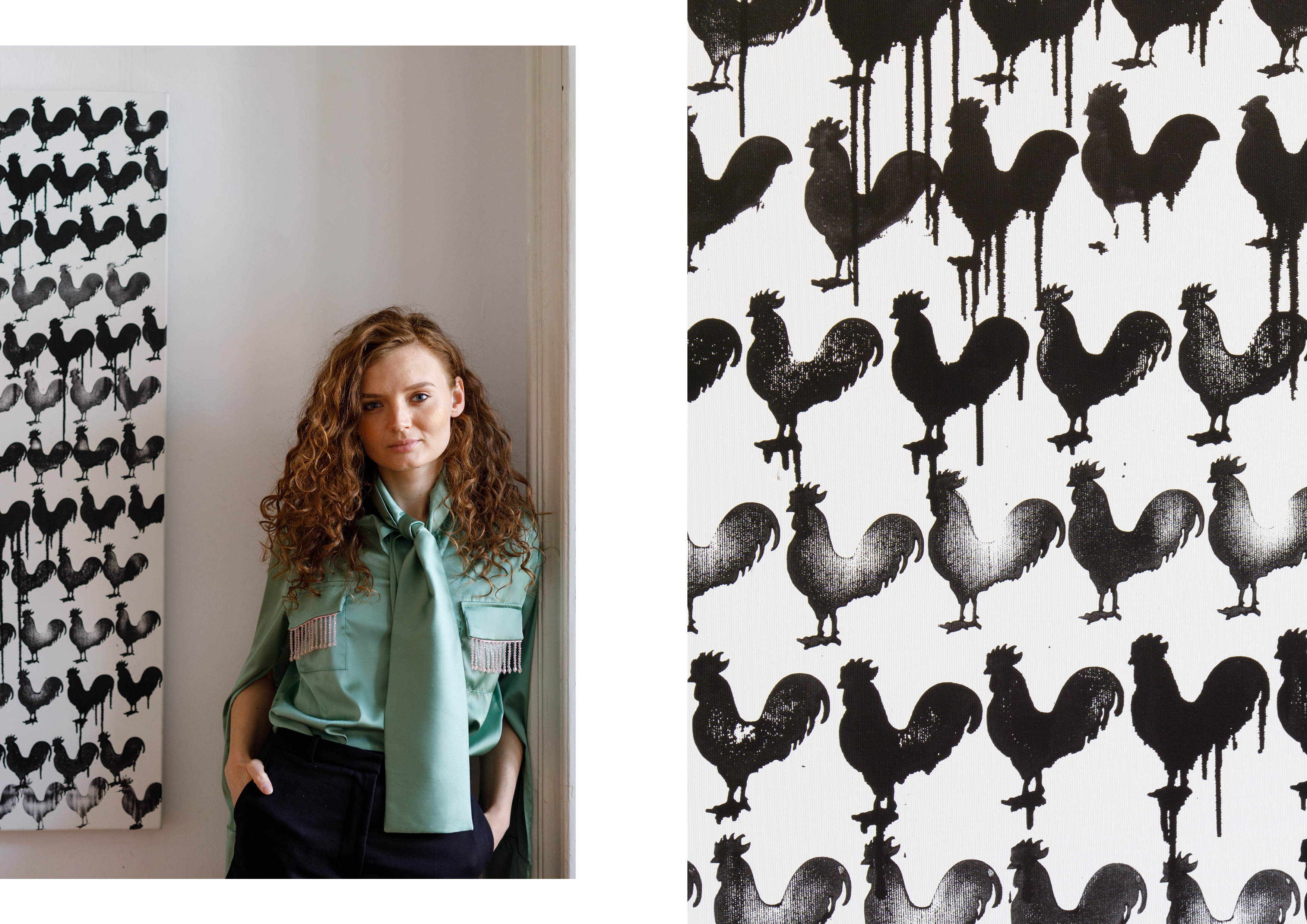
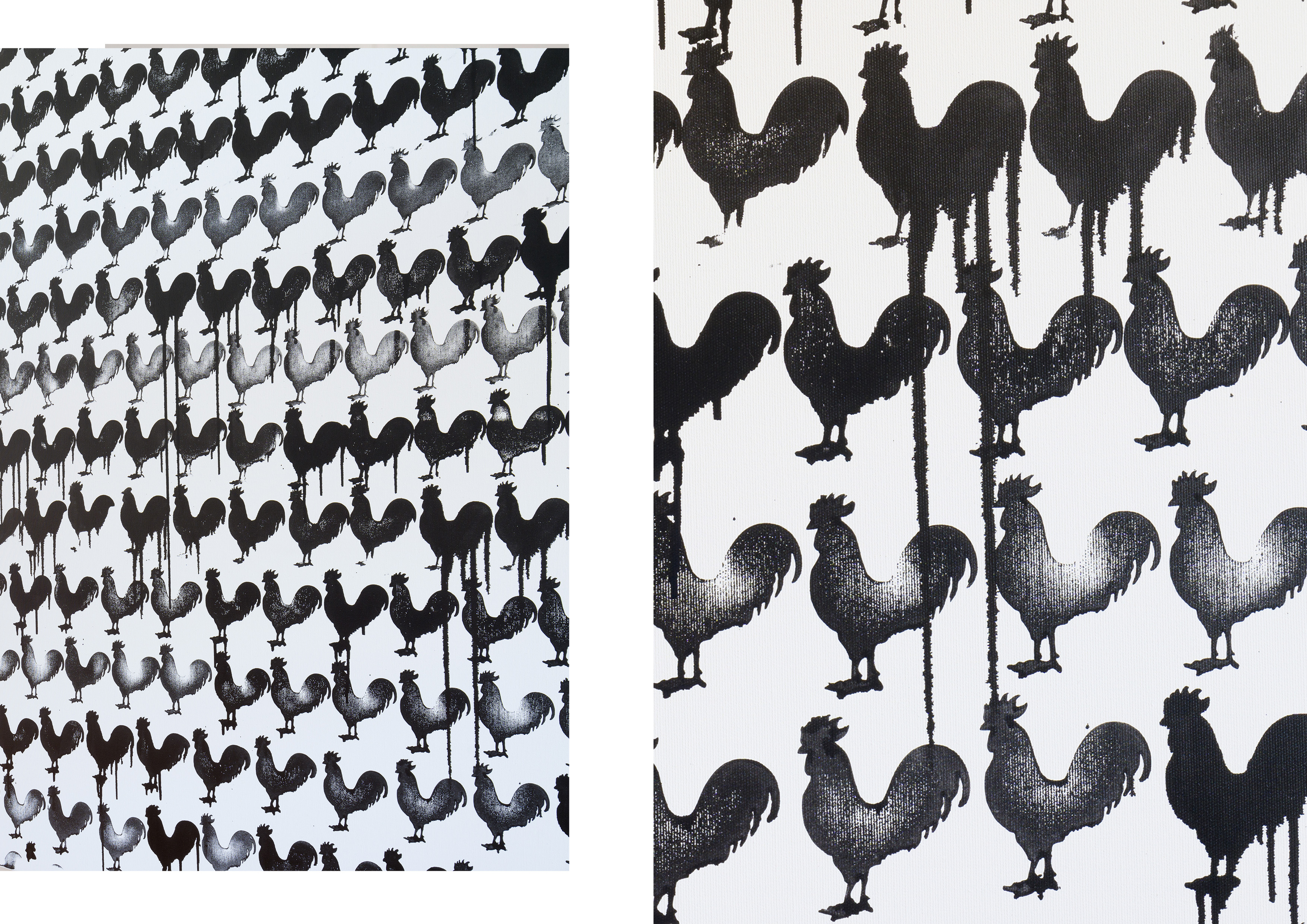
By using the procedure of multiplication, i was able to portray a graphic army of roosters. The proposed technique that is that of graffiti art, often interpreted as vandalism however it the subculture of the oppressed, of those who use street art to fight against the injustices of the world.
What we were attempting to exploit was the concept of concented vandalism, one that is ‘owned’. Similarly, dozens of roosters have been printed on textile using a special ink used for printing on different textures.
From afar, the roosters appear to lose their individuality. And despite the fact that each and every one o them is different in shape and tonality, in the final image, one can notice their common features which collide to create an image that represents a call for unity. The liniar positioning of the roosters was intentional as to mimic a letter, one that is still being written. A letter of love. The roosters come together creating a new language, one that lacks translation but that speaks for itself, repeating a singular theme: unity. The ultimate vision was to call humanity back to common values such as empathy, accepting and understanding.
The Allegory of Multiculturalism
